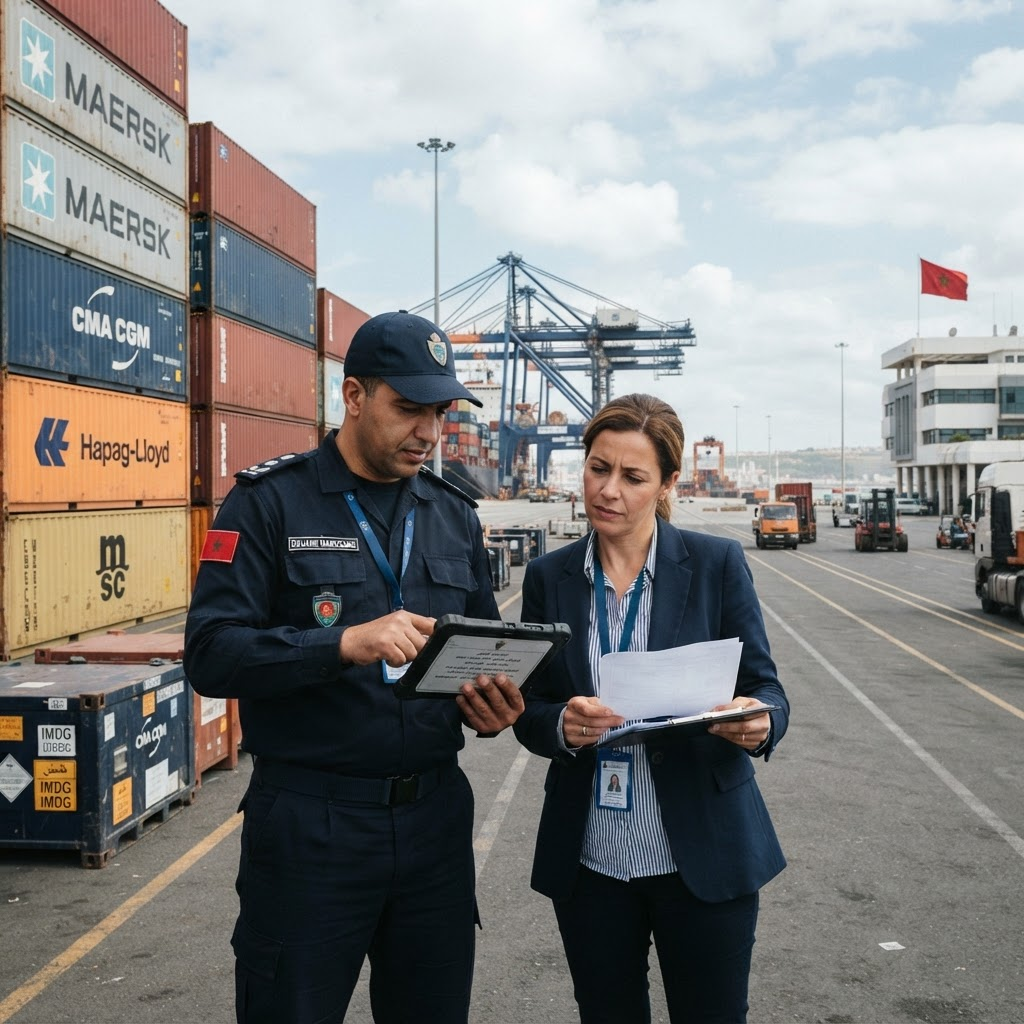
Importing goods into Morocco can be a smooth process when the shipment is correctly prepared before departure. However, many import delays happen because of missing documents, unclear product descriptions, incorrect HS codes, incomplete invoices, missing certificates of conformity, or late preparation on PortNet.
For companies importing to Morocco, customs clearance is not just a final administrative step. It is a key part of the supply chain that affects cost, delivery time, compliance, and customer satisfaction.
This guide explains how customs clearance works in Morocco, what documents are usually required, how PortNet fits into the process, which products may need additional controls, and how importers can avoid common mistakes.
What Is Customs Clearance?
Customs clearance is the process that allows imported goods to legally enter a country after the required declaration, document review, control, duty calculation, and authorization steps have been completed.
In Morocco, customs clearance may involve several parties depending on the shipment:
- The importer
- The exporter or supplier
- The freight forwarder
- The customs broker or declarant
- The shipping line, airline, or road carrier
- The port, airport, or bonded facility
- Moroccan Customs
- Regulatory authorities depending on the type of goods
The goal is to confirm that the goods are properly declared, compliant with Moroccan regulations, and cleared for release after the required duties, taxes, and procedures are completed.
Why Customs Clearance Matters for Importers in Morocco
A shipment can be well priced and transported on time, but still face delays if the customs file is incomplete or inaccurate. For importers, this can create extra costs such as storage fees, demurrage, detention, additional handling charges, missed delivery deadlines, and operational disruption.
Good customs preparation helps businesses:
- Reduce clearance delays
- Avoid unnecessary storage or demurrage costs
- Improve delivery planning
- Prevent documentation disputes
- Ensure regulatory compliance
- Better estimate total landed cost
- Improve communication between supplier, buyer, and logistics partner
For Moroccan importers, customs clearance should be prepared before the cargo arrives, not after the vessel, aircraft, or truck has already reached its destination.
What Is PortNet in Morocco?
PortNet is Morocco's national digital platform for foreign trade procedures. It is used by importers, exporters, freight forwarders, customs stakeholders, and other trade operators to manage and exchange information related to import and export operations.
Through PortNet, operators can handle several trade-related procedures digitally, including import documents, foreign trade formalities, licences, permits, certificates, and communication with relevant stakeholders.
For importers, PortNet helps centralize procedures and improve traceability. Instead of managing every document manually or through separate channels, businesses can follow trade operations through a digital environment designed for import/export processes.
Common Import Documents Required for Customs Clearance in Morocco
The exact documents required depend on the type of goods, country of origin, transport mode, Incoterm, value, and applicable regulations. However, most import operations require a core set of documents.
1. Commercial Invoice
The commercial invoice is one of the most important documents in customs clearance. It should clearly show:
- Seller and buyer details
- Invoice number and date
- Product description
- Quantity
- Unit price and total value
- Currency
- Incoterm
- Country of origin
- Payment terms, when applicable
A vague product description can create delays. For example, "spare parts" is usually not enough. The invoice should describe what the goods are, what they are used for, and any technical details needed for classification.
2. Packing List
The packing list explains how the goods are packed. It usually includes:
- Number of packages
- Gross weight
- Net weight
- Dimensions
- Pallet or carton details
- Marks and numbers
- Packaging type
The packing list should match the commercial invoice and transport document. Any mismatch between weight, quantity, or package count may create questions during clearance.
3. Transport Document
The transport document depends on the mode of transport:
- Bill of Lading for ocean freight
- Air Waybill for air freight
- CMR for international road freight
- Courier waybill for express shipments
This document confirms the movement of goods and provides essential shipment details such as shipper, consignee, origin, destination, and cargo description.
4. Certificate of Origin
A certificate of origin may be required to confirm where the goods were manufactured or produced. This can be important for tariff treatment, trade agreements, and regulatory control.
The country of origin should be consistent across all documents.
5. HS Code
The HS code is used to classify the goods for customs purposes. It influences duty rates, taxes, restrictions, required certificates, and applicable regulations.
Using the wrong HS code can lead to delays, incorrect duty calculation, penalties, or additional controls. Importers should verify classification before shipment whenever possible.
6. Technical Data Sheet
For many industrial products, machines, electronics, equipment, chemicals, or regulated goods, a technical data sheet may be requested. This helps authorities understand the product's specifications, composition, use, and compliance status.
A good technical sheet should include:
- Product name
- Model or reference
- Material or composition
- Technical specifications
- Intended use
- Manufacturer information
- Standards or certifications, if applicable
7. Certificates, Licences, or Authorizations
Some products require additional documentation before they can be imported or placed on the Moroccan market. This may include certificates of conformity, import licences, technical approvals, sanitary or phytosanitary documents, or specific authorizations depending on the product category.
The importer should confirm these requirements before confirming the purchase or arranging transport.
Products That May Require Additional Control
Not all goods are treated the same way. Some products may be subject to technical regulations or additional controls before import clearance or market placement.
This can include categories such as:
- Electrical products
- Construction materials
- Machinery and industrial equipment
- Toys and childcare products
- Textiles and footwear
- Automotive parts
- Chemical products
- Medical or health-related products
- Food products
- Telecom or radio-frequency equipment
- Products requiring safety or conformity verification
The exact requirement depends on the product and its applicable regulation. This is why importers should never rely only on a freight rate. Before shipping, they should confirm whether the product requires a certificate, licence, authorization, conformity document, or technical file.
What Is a Certificate of Conformity?
A Certificate of Conformity, often called CoC, is a document showing that a product complies with applicable standards or technical regulations.
For some imported industrial products, conformity documentation may be required before the goods are released or placed on the market. Depending on the product, the control may be carried out before shipment or upon arrival.
A CoC file may require documents such as:
- Commercial invoice
- Packing list
- Technical sheet
- Product test report
- Certificate from an approved body
- Bill of lading or transport document
- Product photos or labels
- Manufacturer information
Importers should confirm the required documents early, because missing conformity documentation can create serious delays after arrival.
Duties, Taxes, and Landed Cost
Customs clearance is also linked to the calculation of duties and taxes. The amount payable depends on several factors:
- Customs value
- HS code
- Product category
- Country of origin
- Applicable trade agreements
- Freight and insurance terms
- Incoterm
- VAT and other applicable charges
The total cost of importing goods is not only the freight cost. Importers should calculate the full landed cost, which may include:
- Product cost
- International freight
- Insurance
- Origin charges
- Destination charges
- Customs duties
- VAT
- Port or airport charges
- Storage, demurrage, or detention if delayed
- Customs broker or handling fees
- Local delivery
A shipment that looks cheap at the freight quotation stage can become expensive if the customs file is incomplete or if unexpected duties, controls, or storage charges apply.
The Role of Incoterms in Customs Clearance
Incoterms define the responsibilities of the seller and buyer in an international transaction. They clarify who pays for transport, who bears the risk, and where the responsibility transfers.
For customs clearance, Incoterms are important because they affect:
- Which party arranges transport
- Which party pays freight
- Whether insurance is included
- What value should be declared
- Which costs are included in the invoice
- Who is responsible for export and import formalities
For example, under EXW, the buyer has more responsibility from the seller's premises. Under DDP, the seller takes responsibility for delivering the goods with duties paid, although practical implementation depends on the country and importer setup.
A wrong or unclear Incoterm can create confusion between supplier, buyer, freight forwarder, and customs broker.
Common Customs Clearance Mistakes in Morocco
Many customs problems are avoidable. The most common issues include:
1. Vague Product Descriptions
Descriptions like "parts," "goods," "equipment," or "samples" may not be enough. Customs and regulatory authorities need to understand what the product is.
2. Wrong HS Code
An incorrect HS code may lead to wrong duty calculation, missing regulatory requirements, or reclassification during clearance.
3. Missing Certificate or Authorization
Some products require additional documents. If this is discovered only after arrival, the shipment may be blocked until the file is completed.
4. Invoice and Packing List Mismatch
If the invoice says 100 units and the packing list says 95 units, this can create delays. The same applies to weight, package count, and product references.
5. Incorrect Importer Information
The importer's legal name, address, tax information, and registration details should be consistent across documents.
6. Late Document Preparation
Waiting until the goods arrive to prepare the customs file can lead to storage costs and avoidable delays.
7. Unclear Incoterm
If the Incoterm is missing or inconsistent, it may be difficult to determine which costs are included in the customs value.
8. Missing Technical Sheet
For industrial products, machinery, electronics, or regulated items, a technical sheet can be essential for classification and conformity review.
How to Prepare Before Shipping to Morocco
The best way to avoid customs delays is to prepare the import file before the cargo departs.
Before shipping, importers should verify:
- Product description
- HS code
- Commercial invoice
- Packing list
- Country of origin
- Incoterm
- Transport mode
- Required certificates
- Required licences or authorizations
- Technical data sheet
- Importer information
- PortNet requirements
- Expected duties and taxes
- Delivery timeline after customs clearance
This preparation allows the freight forwarder and customs broker to identify possible issues before the shipment is already in transit.
Customs Clearance by Transport Mode
Customs procedures may vary depending on how the goods arrive in Morocco.
Ocean Freight
Ocean freight services in Morocco are commonly used for containers, LCL shipments, bulk cargo, and large volumes. Importers should prepare the bill of lading, packing list, invoice, arrival notice, and any required certificates before the vessel arrives.
Delays in ocean freight can generate demurrage, detention, and port storage charges.
Air Freight
Air freight is used for urgent, high-value, or time-sensitive cargo. The clearance process can be faster than ocean freight, but documents must be accurate because delays can quickly affect delivery commitments.
The air waybill, invoice, packing list, and product documents should be ready before arrival.
Road Freight
Road freight is important for regional and cross-border flows. For road shipments, the CMR, invoice, packing list, and customs documents should match the cargo being transported.
Road freight is often used for European-Moroccan trade lanes and requires good coordination between carrier, freight forwarder, customs broker, and consignee.
Courier and Express Shipments
Courier shipments are often used for small parcels, samples, documents, and urgent goods. However, even small shipments may require customs documentation depending on value and product type.
Importers should not assume that a courier shipment is exempt from customs review.
Import Compliance Checklist
Before approving a shipment to Morocco, use this checklist:
- Is the importer registered and ready to import?
- Is the product description clear and accurate?
- Has the HS code been reviewed?
- Is the commercial invoice complete?
- Does the packing list match the invoice?
- Is the country of origin confirmed?
- Is the Incoterm clearly stated?
- Are freight and insurance costs clear?
- Is a certificate of origin required?
- Is a Certificate of Conformity required?
- Is an import licence or authorization required?
- Is the technical data sheet available?
- Are product photos or labels available if needed?
- Has the PortNet process been prepared?
- Are estimated duties and taxes understood?
- Has the final delivery plan been confirmed?
How Hitek Logistic Morocco Can Help
At Hitek Logistic Morocco, we support businesses with freight and logistics solutions designed to simplify international trade operations.
Our team can assist with:
- Air freight
- Ocean freight
- Road freight
- Courier and express shipments
- Warehousing
- Special projects and white-glove logistics
- Strategic logistics planning
- Shipment coordination
- Customs-clearance support
- Import documentation review
- Transport cost optimization
By working with an experienced logistics partner, importers can reduce uncertainty, improve document preparation, and coordinate shipments more efficiently from origin to final destination.
Conclusion
Customs clearance in Morocco requires more than submitting documents after the cargo arrives. It requires preparation, accurate information, regulatory awareness, and coordination between all parties involved in the shipment.
Importers should pay special attention to PortNet procedures, commercial documents, HS codes, Incoterms, certificates of conformity, import licences, and product-specific requirements.
A well-prepared customs file can help reduce delays, avoid unnecessary costs, and improve the reliability of the entire supply chain.
If your company is importing goods into Morocco, Hitek Logistic Morocco can help you plan the shipment, review the logistics requirements, and coordinate the process from transport to delivery. Request a tailored freight quote with your cargo details.