Introduction — Morocco's Automotive Industry and the Logistics Behind It
Morocco has developed into an important automotive manufacturing and export hub connecting Europe, Africa and international markets.
Behind vehicle assembly and automotive component manufacturing is a highly coordinated logistics network. Components must arrive at the right plant, in the right quantity, at the right time and, in some cases, in the exact sequence required by production.
This is where automotive logistics becomes different from conventional freight forwarding.
A shipment of automotive components is not simply a shipment from point A to point B. A delay at any stage—from supplier collection in Europe to the Tanger Med crossing, customs processing, warehousing or final factory delivery—can affect production planning.
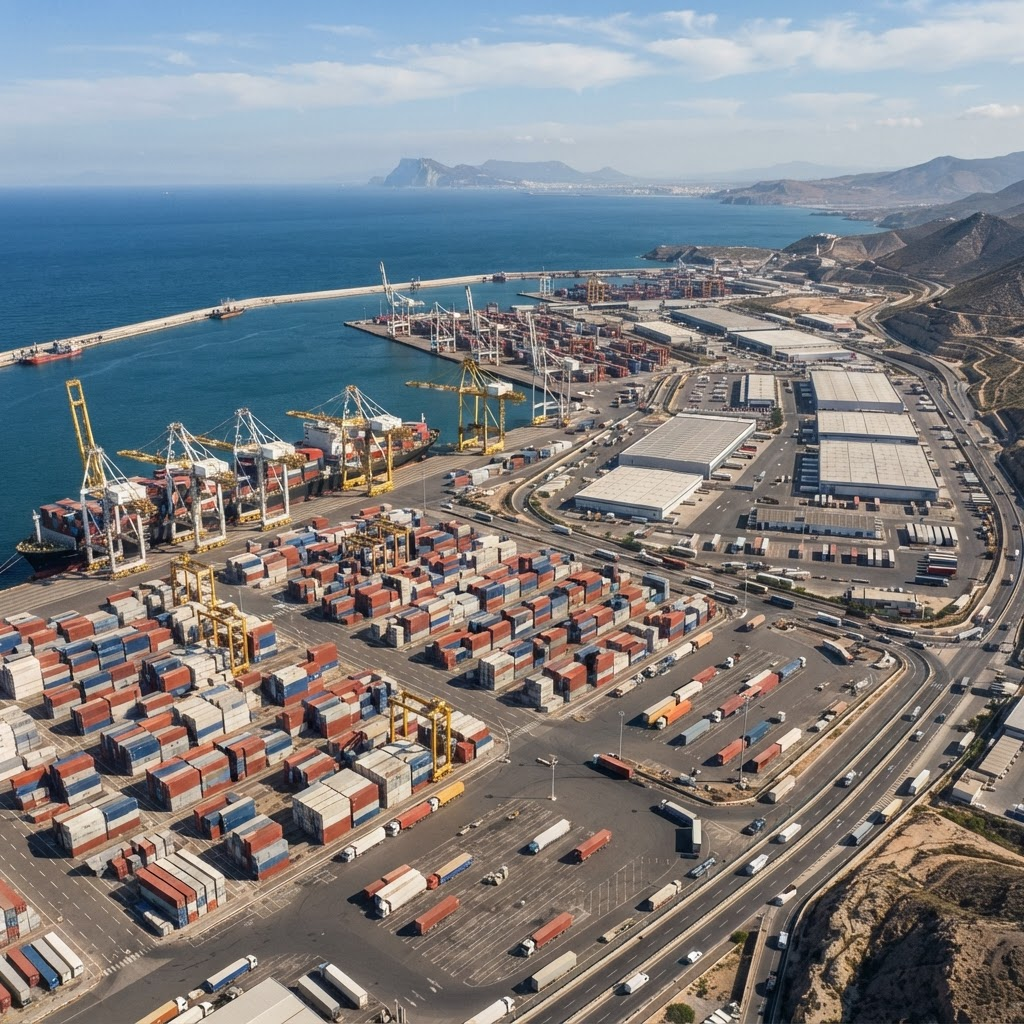
In northern Morocco, Tanger Med plays a central role in this ecosystem. Its industrial platform brings together automotive manufacturers and suppliers across different tiers, while the port and surrounding logistics infrastructure connect Moroccan production with European and international markets.
For automotive companies operating in Morocco in 2026, the logistics strategy therefore needs to combine international freight, warehousing, inventory management, customs coordination, local distribution and production-critical delivery.
This article is part 1 of a four-part Hitek Logistic Morocco series on automotive logistics in Morocco in 2026. The other parts cover JIT & JIS Automotive Logistics, Morocco–Europe Automotive Freight and Automotive Warehousing & 3PL.
Why Morocco Has Become an Automotive Logistics Hub
Morocco's automotive ecosystem includes vehicle manufacturers as well as a broad network of Tier 1, Tier 2 and Tier 3 suppliers.
The Tanger Med industrial platform hosts nearly 120 automotive operators across these supplier tiers, covering activities such as wiring, metal processing, stamping, vehicle interiors, seats, plastic injection, filters, radiators, shock absorbers and other automotive components.
The location also supports two-way industrial flows.
Components manufactured in Morocco can supply vehicle production in Morocco and European assembly plants, while components and raw materials from Europe and other international markets can move into Morocco for local production.
This creates a supply chain that depends heavily on reliable international transport and carefully positioned inventory.
A simplified automotive supply chain can look like:
European Supplier → Road Freight → Tanger Med → Customs → Warehouse / Buffer Stock → Moroccan Factory → Production
The reverse flow can connect Moroccan suppliers with European customers:
Moroccan Supplier → Tanger Med → Ro-Ro / Road Freight → European Distribution → European Automotive Plant
The logistics provider therefore becomes an important operational link between suppliers, ports, warehouses and factories.
The Role of Tanger Med in Automotive Logistics
Tanger Med is more than a container port.
The wider Tanger Med ecosystem combines port infrastructure, logistics zones, industrial activity, road and rail connections, vehicle terminals and access to international shipping and European transport networks.
This makes it particularly relevant to automotive supply chains.
Automotive manufacturers and suppliers can use the ecosystem for:
- International road freight
- Ro-Ro transport
- Container shipping
- Automotive component warehousing
- Cross-docking
- Consolidation and deconsolidation
- Inventory management
- Local distribution
- Customs coordination
- Finished-vehicle logistics
- Emergency and production-critical shipments
The proximity between industrial operations and logistics infrastructure can reduce unnecessary movement between suppliers, warehouses, ports and factories.
For automotive companies, this geographical advantage can become particularly valuable when production schedules are tightly synchronized.
Why Automotive Logistics Requires a Specialized Approach
Automotive logistics differs from conventional freight because the value of timing can be extremely high.
A shipment that arrives one day late may not simply create a late delivery. Depending on the component and production system, it can affect assembly planning, labour scheduling, inventory availability and downstream operations.
For this reason, automotive logistics requires coordination across:
Supplier → Freight Forwarder → Port → Customs → Warehouse → Transport → Factory
Every handover should be planned. Every inventory movement should be visible. Every critical shipment should have an appropriate contingency plan.
Automotive Logistics in Morocco in 2026
Morocco's automotive logistics ecosystem continues to develop around manufacturing, supplier networks, Tanger Med and international trade corridors.
Tanger Med's automotive platform connects Moroccan production with European assembly sites, while the port and logistics infrastructure support both component flows and finished-vehicle movements.
The logistics strategy for automotive companies is therefore increasingly about integration.
The strongest supply-chain model is not necessarily the one with the lowest individual freight or storage cost. It is the one that combines:
Reliable Transport + Strategic Warehousing + Inventory Visibility + Customs Coordination + Flexible Distribution
For companies supplying Moroccan automotive plants or exporting components from Morocco to Europe, these elements can work together to create a more responsive and resilient supply chain.
Hitek supports these flows through road freight, ocean freight, air freight and warehousing services across the Tanger Med corridor.
Conclusion
Morocco's position as an automotive hub in 2026 rests on more than manufacturing capacity. It depends on the logistics links that connect European suppliers, Moroccan plants and export markets.
Tanger Med brings port infrastructure, logistics zones and industrial activity together, which allows automotive companies to plan transport, warehousing and customs coordination as one integrated operation.
Understanding this ecosystem is the first step. The next parts of this series look in detail at JIT and JIS logistics, Morocco–Europe freight, and automotive warehousing and 3PL.
Contact Hitek Logistic Morocco to discuss your automotive supply-chain requirements.