Introduction — The Corridor Behind Morocco's Automotive Industry
Many automotive components used in Moroccan plants are produced in Europe, and many components manufactured in Morocco are delivered to European assembly sites. The Morocco–Europe freight corridor is therefore one of the most important links in the automotive supply chain.
This article looks at how the corridor works, when to choose FTL or LTL, which customs documents matter, and how to balance transport cost with reliability.
This article is part 3 of a four-part Hitek Logistic Morocco series on automotive logistics in Morocco in 2026. The other parts cover Morocco's Automotive Hub & Tanger Med, JIT & JIS Automotive Logistics and Automotive Warehousing & 3PL.
Morocco–Europe Freight for Automotive Supply Chains
The Morocco–Europe corridor is fundamental to the automotive industry.
A typical shipment from a European supplier to Morocco may follow this route:
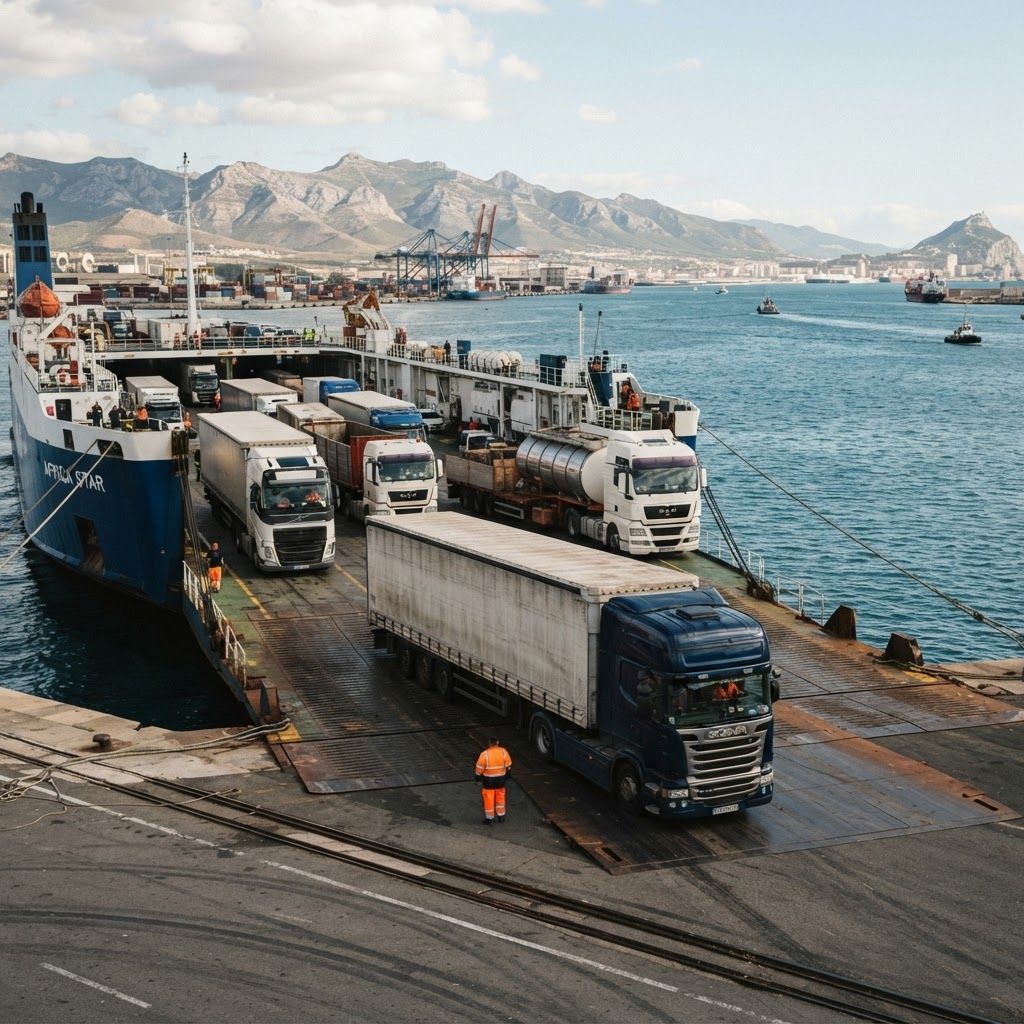
European Supplier → Truck → Southern Europe → Ro-Ro → Tanger Med → Moroccan Road Network → Factory
The reverse operation can move Moroccan components or finished goods toward European customers.
Because Morocco and Europe are connected by a short maritime crossing but remain separate customs territories, the complete movement needs to be planned as one operation.
Key considerations include:
- Pickup scheduling
- Trailer availability
- FTL or LTL selection
- Ferry and port operations
- Customs documentation
- Border formalities
- Delivery appointments
- Driver and vehicle planning
- Shipment tracking
- Final-mile delivery
FTL vs LTL for Automotive Components
The appropriate road-freight solution depends on shipment size, urgency and production requirements.
FTL — Full Truckload
FTL means the shipment uses a dedicated truck or trailer. It can be suitable for large automotive shipments, production-critical cargo, high-frequency supplier flows, time-sensitive deliveries, dedicated factory deliveries and shipments requiring controlled handling.
LTL — Less Than Truckload
LTL allows smaller shipments to share trailer capacity with other cargo. It can be useful when shipment volumes are smaller, full-truck capacity is not required, deliveries can be consolidated, or transport frequency is more important than dedicated equipment.
The right choice depends on the complete logistics requirement rather than shipment weight alone.
Customs and Documentation for Automotive Freight
International automotive shipments require accurate documentation and coordination.
Depending on the shipment, documentation can include:
- Commercial invoice
- Packing list
- CMR
- Customs documentation
- Certificates or origin documentation where applicable
- Transport instructions
- Product-specific documents
Consistency is important. The cargo description, quantities, weights and other information should match across the relevant documents.
For automotive companies moving large volumes across borders, customs coordination should be integrated into the transport plan rather than treated as a separate administrative step.
Cost vs Reliability in Automotive Freight
In automotive logistics, the cheapest freight option is not always the most economical one. A lower transport rate can quickly lose its value if a delayed shipment disrupts a production schedule.
For automotive manufacturers, the objective is not simply to reduce the transport price. The objective is to balance cost, reliability, transit time and production continuity.
When comparing Morocco–Europe freight options, automotive companies can evaluate:
- Transit time and schedule reliability
- Dedicated versus shared trailer capacity
- Documentation accuracy and customs readiness
- Shipment visibility and tracking
- Availability of backup capacity
- The cost of a potential production stoppage
The right balance often combines planned FTL or LTL flows for regular volumes with contingency transport options for urgent or production-critical cargo.
Conclusion
Morocco–Europe automotive freight requires coordination across collection, road transport, Ro-Ro crossings, port operations, customs and final delivery.
Choosing between FTL and LTL, preparing consistent documentation and evaluating reliability alongside price helps automotive companies keep components moving between suppliers and production sites.
Continue the series with Morocco's Automotive Hub & Tanger Med, JIT & JIS Automotive Logistics and Automotive Warehousing & 3PL. Hitek arranges these movements through road freight, ocean freight and air freight services.
Contact Hitek Logistic Morocco to discuss your automotive supply-chain requirements.